Assessing community responses to postpartum psychosis
This page explores the current landscape of community support and outreach programs for postpartum psychosis in Charlotte, North Carolina. We dive into the types of resources available, their accessibility, adequacy, and overall effectiveness in addressing the needs of those affected, including the impact of recent global events.

Understanding resource forms
Women experiencing postpartum psychosis in this region may access support through several types of services: Hospitals and Emergency Departments, OB-GYN and Post Partum Clinics, Hotlines (988 Suicide and Crisis Lifeline), and Support Organizations. However, many are still lacking correct support and navigations through this mental health crisis.

Navigating access to help
How easy or difficult is it to find help for postpartum psychosis within our community? This section evaluates the accessibility of resources, considering factors such as waiting lists, geographical limitations, insurance coverage, and the clarity of information available to those seeking support. Identifying barriers to access is a critical step towards creating a more inclusive and responsive support system.
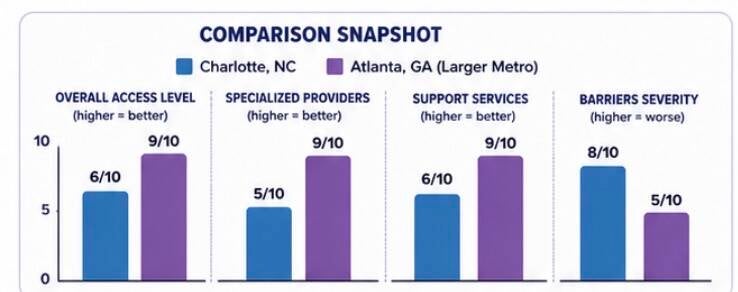
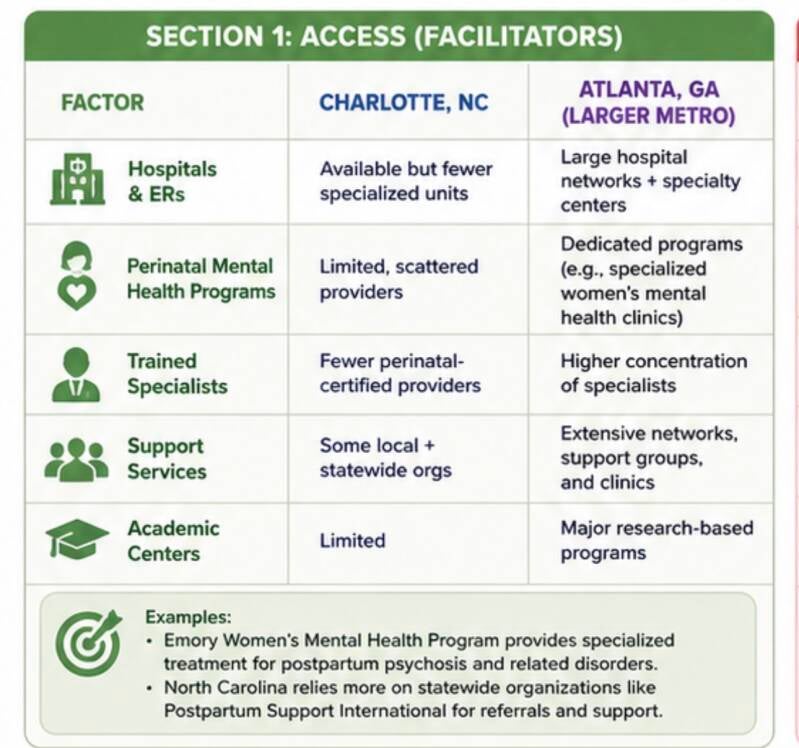
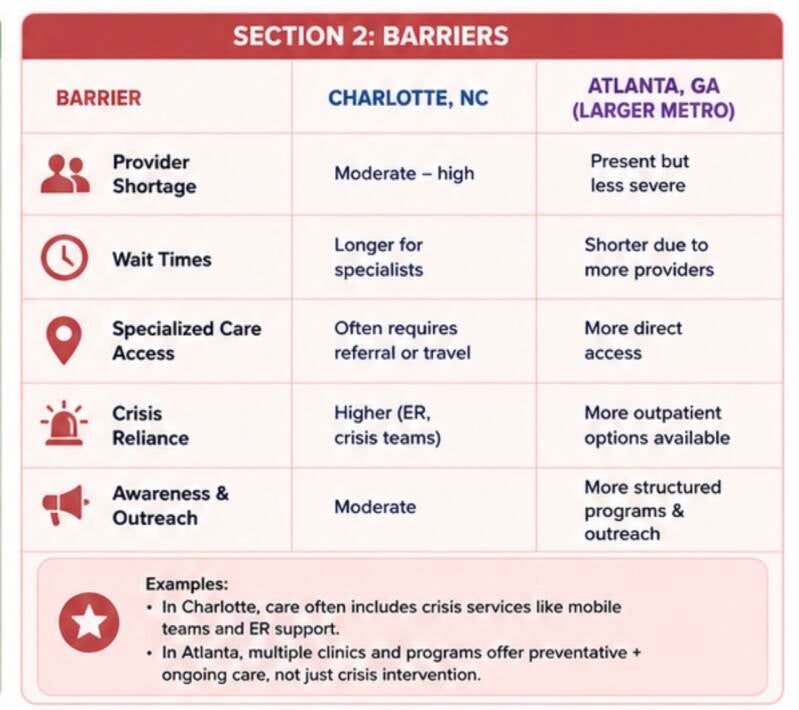
Access depends on whether the symptoms are recognized quickly or which region are you within. Below, listed are a few charts explaining how easier access and barriers can hinder help for many individuals.

Assessing resource adequacy
Are current resources adequate to meet the demand for support related to postpartum psychosis? We investigate whether the volume and scope of available services truly match the needs of the community in Charlotte, North Carolina. This includes examining staffing levels, funding, and the capacity of existing programs to handle the influx of individuals seeking assistance.
Some do cover a few things, however there are many designed for general mental health issues rather than specifically postpartum psychosis. Here are a few helpful approaches:
I. Helpful Approaches
Emergency Psychiatric Hospitalization, Medication Management and or Therapy after stabilization
II. Missing or Limited Approaches
Routine psychosis screening after birth, Specialized postpartum psychiatric programs near the Charlotte, North Carolina Area, and Mother-Infant inpatient treatment.

Centralized versus scattered support
Are the needs and resources for postpartum psychosis centralized or scattered across various organizations and locations? This section analyzes the organizational structure of community support, exploring whether a coordinated approach or a fragmented system is currently in place. Understanding this distribution helps in streamlining access and improving the overall efficiency of help delivery.
When looking at Post Partum Psychosis needs and often requirements, resources are often spread across multiple programs and systems:
OB-GYN for postpartum checkups.
Therapist for counseling.
Psychiatrist for medication.
Pediatric visits where concerns may first appear.
Crisis hotline for emergencies.
Families that are already struggling may find this disjointed system to be too much to handle and cause more harm than help.

COVID-19's impact on access
The COVID-19 pandemic has significantly altered healthcare delivery and access to support services. Here, we examine how the pandemic has affected the availability and delivery of resources for postpartum psychosis in our community. This includes shifts to telehealth, changes in support group formats, and any new challenges or innovations that emerged during this period. Below, we have listed a few ways maternal mental health has been affected throughout the COVID-19 pandemic:
Isolation after childbirth.
Fear of illness and increased anxiety/depression.
Reduced family support.
Delayed in-person appointments.
Recommendations for improvement
While many resources exist to help those experiencing postpartum psychosis, our assessment reveals that there is a critical need for more options. We propose actionable recommendations to enhance accessibility, increase adequacy, and improve the overall effectiveness of community support. Our goal is to ensure that every individual in Charlotte, North Carolina, can easily find and receive the comprehensive care they deserve. We as a team believe the Charlotte, NC area could benefit greatly from adding additional programs and outreach support groups.
Create Your Own Website With Webador